
Best Billing Software for IT Companies in 2026: Reviews & Comparison
Discover the top invoicing and billing software for IT companies in 2026. Compare features, automation capabilities, and integrations for dev shops and freelancers.
Compare the top billing software for IT companies, dev shops, and freelance developers in 2026. See how tools like QuickBooks, Stripe, and Diffbill handle invoicing and tech stack integration.
What makes the best IT billing software in 2026?
The best billing software for IT companies 2026 integrates deeply with development workflows, supports recurring SaaS models, and automates invoice creation. The top tools now offer automated technical-to-client translations, reducing administrative overhead and preventing revenue leakage by turning code commits directly into client-friendly billing line items.
Key Takeaways
- Opt for automated systems over manual data entry to prevent revenue leakage.
- Choose software that integrates with your existing tech stack (GitHub, Stripe).
- Look for AI capabilities that auto-translate technical work into client-friendly invoices.
According to Source 2, relying on manual processes or disconnected billing tools often leads to revenue leakage, failed payments, and wasted internal resources. As dev shops and freelancers scale their client base, they quickly outgrow manual spreadsheets. A modern billing system must consolidate invoicing, payment processing, and bookkeeping into a single connected workflow to eliminate the end-of-month administrative scramble.
Core capabilities for modern dev shops
Standardizing your billing operations limits awkward client follow-ups and stabilizes cash flow. As noted by Source 3, platforms that embrace automation across recurring invoices, progress billing, and milestone-based payments significantly shorten the timeline between delivering work and getting paid. The less manual intervention required to calculate billable hours and track payment statuses, the faster you capture revenue.
For developers and technical consultants, the biggest remaining bottleneck is translating technical work for client invoices so complex deliverables become clear billing language. The most efficient billing tools now bridge the gap between your version control system and your accounting ledger. When your invoicing software can automatically pull data from closed pull requests and rewrite it for non-technical stakeholders, you spend less time formatting invoice descriptions and more time shipping code.
Top broad billing software platforms for established IT businesses
When evaluating the best billing software for IT companies 2026, most results highlight heavyweights like QuickBooks, Stripe Billing, and FreshBooks. These platforms excel at general financial workflows like strict tax compliance and recurring retainers. However, their broad focus means they often lack native support for specialized, repository-based development workflows.
Generalized billing solutions shine when tracking predictable recurring payments or high-level billable hours. QuickBooks, for example, is recognized for consolidating accounting and milestone-based invoicing into a single workflow designed to minimize checkout friction (Source 3). Similarly, established SaaS-centric billing tools prioritize subscription management and recurring usage caps to help avoid revenue leakage as software companies scale (Source 2).
The main tradeoff with these heavyweight platforms is the unavoidable manual data entry required for project-based engineering work. If your dev shop bills based on shipped features, preparing invoices in these tools means manually digging through pull requests. You then have to manually translate that technical output into client-friendly language before drafting it all into a generic invoice template.
When to choose a broad accounting platform
Traditional platforms remain a smart choice if your IT business relies strictly on flat retainers or already employs a dedicated finance team. They offer the baseline features established tech agencies need for comprehensive compliance:
- Dedicated tax preparation tools and complex profit and loss reporting.
- Progress invoicing tailored for lengthy, distinct waterfall project phases.
- Integrated checkout portals that handle standard credit card and ACH payments at scale.
The best billing software for GitHub-centric IT freelancers and dev shops
If you are searching for the best billing software for IT companies 2026 has to offer, Diffbill stands out for developers who live in GitHub. While generic tools handle standard subscriptions, Diffbill solves a highly specific problem: translating closed pull requests into professional invoice drafts and seamlessly taking you from merged PR to client ready line items. It eliminates the tedious work of turning raw code into client-ready billing descriptions.
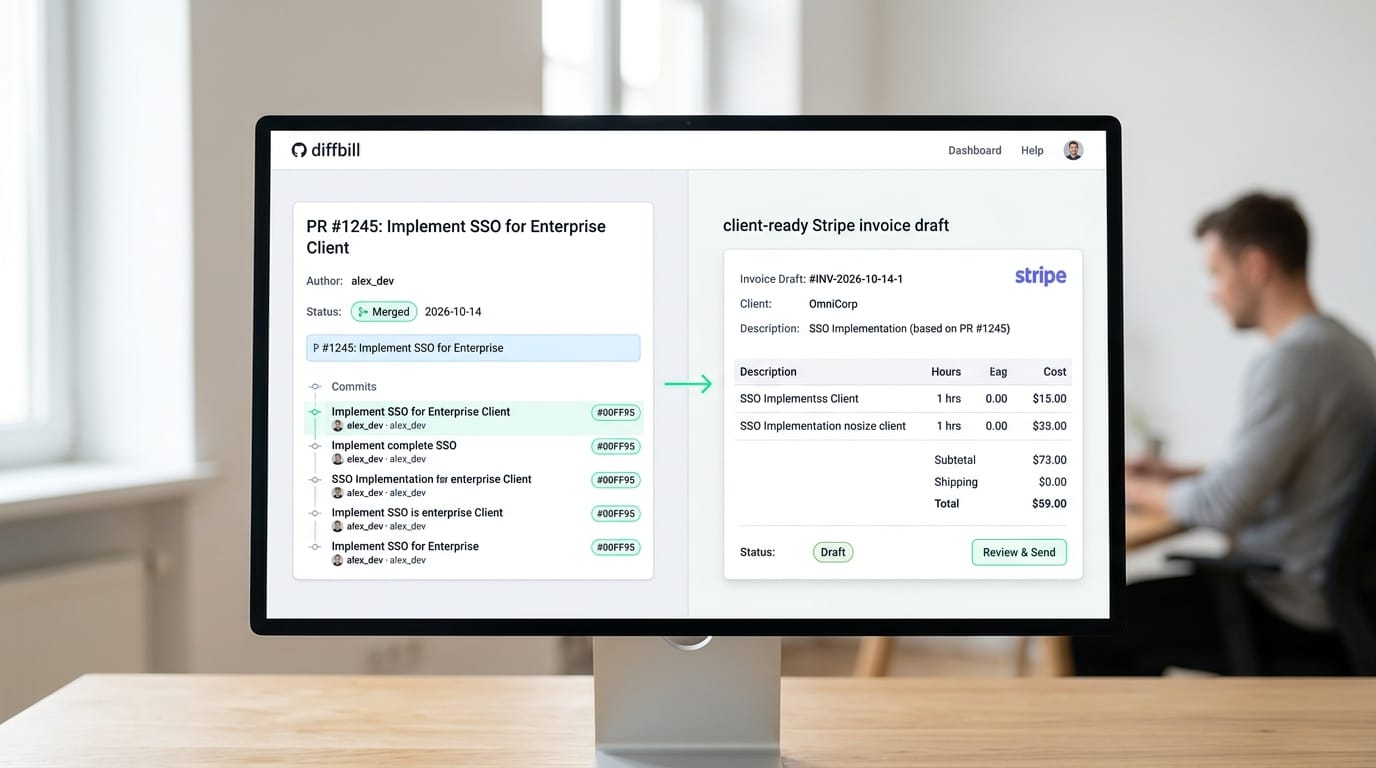
Relying on manual processes to track completed work often leads to missing billable hours—making it harder to avoid underbilling on small fixes—and ongoing revenue leakage, a common operational challenge noted by Source 2 and Source 4. Freelancers and agile dev shops waste valuable time copying technical commit messages into isolated accounting tools. Diffbill prevents this friction by syncing directly with GitHub and Stripe to capture every completed task automatically.
AI-powered invoice customization
Instead of sending clients jargon-heavy commit logs, Diffbill acts as an AI invoice generator for freelancers, using AI to rewrite technical descriptions into clear, professional line items. You can set specific tone controls and verbosity levels for each individual client, ensuring your billing communication always matches their expectations. The system also maintains a source-linked audit trail so your clients can easily verify exactly what work was shipped.
To speed up your administrative routines, Diffbill focuses entirely on developer-friendly workflow enhancements:
- Keyboard-first navigation: Review, edit, and export your invoice drafts rapidly without taking your hands off the keyboard.
- Granular tone controls: Automatically adjust the technical depth of each invoice line item based on a specific client's background.
- Seamless Stripe sync: Push your securely reviewed drafts directly into your existing Stripe account for immediate collection.
Upgrading your financial backend lets you focus on writing code instead of manually tracking down billable hours. Try the Pro Plan today to unlock these advanced customization features and build a highly efficient, automated invoicing pipeline.
Start billing
Must-have features for modern IT invoicing
The best billing software for IT companies 2026 must go beyond basic invoice templates to tackle developer-specific workflows head-on. Modern dev shops and freelancers should demand AI-powered task summarization, keyboard-first navigation for rapid data entry, and source-linked audit trails. These exact features eliminate administrative busywork and translate technical commits into clear billing descriptions.
Relying on disconnected project accounting tools and manual spreadsheets consistently leads to missed billable hours and ongoing revenue leakage (Source 4). Invoicing delays also create awkward client conversations and unpredictable cash flow streams. To fix this, your invoicing suite needs capabilities built specifically for how developers actually ship and track their output.
Core capabilities to expect this year
- AI-powered task summarizing: Clients rarely understand the nuances of a pull request or a complex database migration. Smart billing tools now use AI to rewrite technical git commits into professional, business-value descriptions, creating cognitive ease for the person paying the bill.
- Keyboard-first workflows: Developers rely on keyboard shortcuts to stay in a productive flow state. Modern billing platforms adopt these same UI principles, letting you generate, edit, and send invoice drafts entirely via keystrokes without breaking your momentum.
- Source-linked transparency: Connecting your code repository directly to your billing engine removes all ambiguity about what was delivered. Clients can see exactly how your billed hours align with the actual features shipped to production.
Adopting platforms with these capabilities dramatically reduces the ongoing back-and-forth with clients over invoice specifics (Source 3). When your payment requests are automatically grounded in verifiable code and easily understood language, invoices get approved and paid faster. You spend less time explaining your technical output and more time focusing on your actual codebase.
How to automate your IT billing workflow in 3 steps
Upgrading your invoicing away from manual spreadsheets requires connecting your actual work directly to your payment gateway. By linking your code repositories to an automation tool, you can instantly turn merged pull requests into polished invoices. Evaluating the best billing software for IT companies 2026 often comes down to how efficiently platforms handle this developer handoff.
Most service-based dev shops lose hours tracking down billable tasks or manually translating technical commits into client-friendly language. Standard accounting platforms like QuickBooks natively consolidate invoicing and payment collection into a single, reliable workflow (Source 3). However, these generalized tools still require developers to manually type out line items for the specific coding work they performed. Bridging the gap between your Git host and your financial stack eliminates this persistent administrative drag entirely.
The 3-step automation framework
Learning how to automate invoicing from GitHub repo activity and setting up a direct pipeline from your codebase to your clients takes only a few minutes. Use the following straightforward framework to get your development stack talking directly to your billing system:
Connect your repositories
Configure client specific AI formatting
Sync to your payment gateway
With this automated pipeline running, you naturally prevent revenue leakage from forgotten hours and keep your payment cycles predictable. Your team avoids the end-of-month scramble of decoding old pull request descriptions into business logic for non-technical stakeholders. The result is a clean, source-linked audit trail, faster invoicing, and significantly more time focused on shipping features.
Frequently asked questions about billing software for IT
Finding the best billing software for IT companies 2026 often comes down to your team's specific technical workflows. General accounting platforms handle traditional retainers well, but custom dev shops often need tools that connect directly to their code. If you are evaluating a new billing system, these common questions can help narrow your focus.