
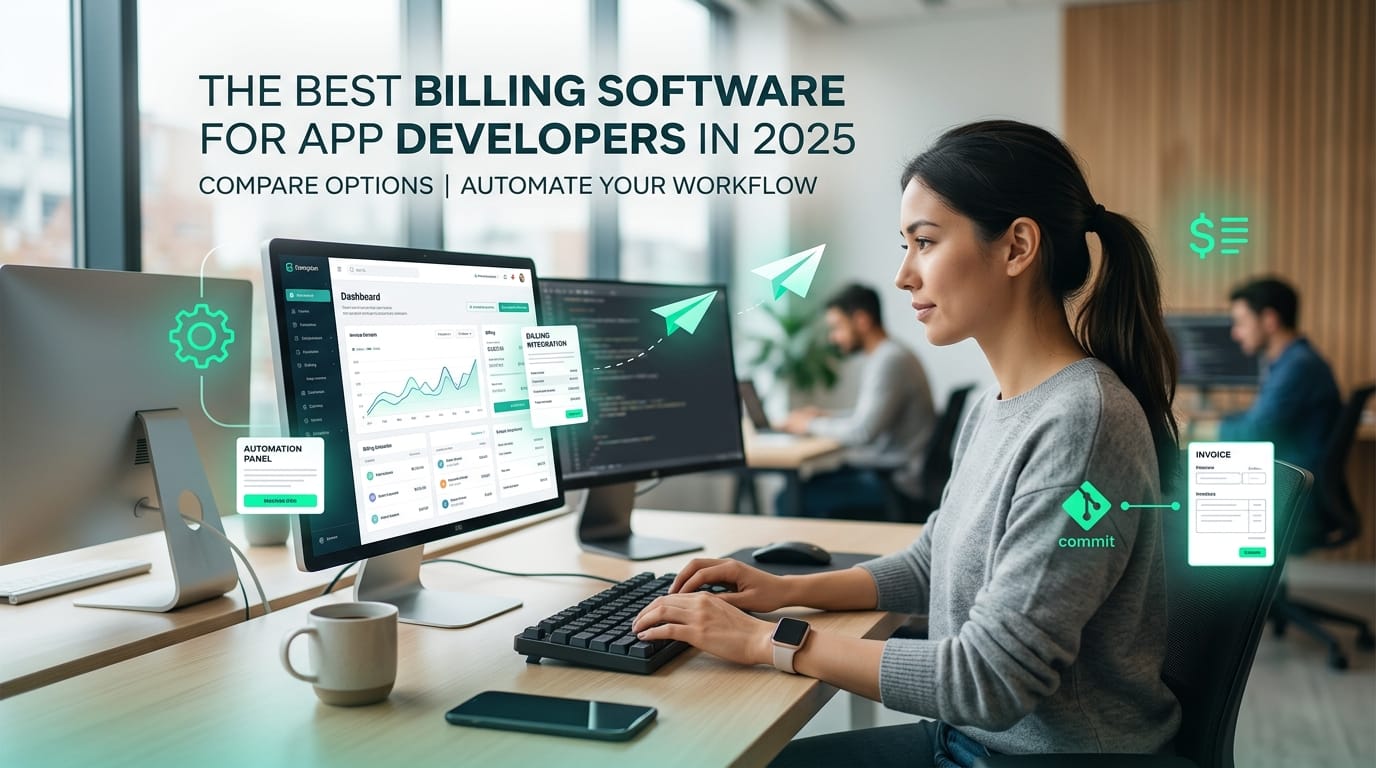
The Best Billing Software for App Developers in 2026
Discover the best billing software for app developers. Compare generic invoicing tools against developer-first platforms that automate GitHub to Stripe workflows.
Compare the top billing software options for app developers and learn how to automate your invoicing workflow directly from version control.
What defines the best billing software for app developers?
The best billing software for app developers integrates seamlessly with your existing tech stack to automate the entire order-to-cash workflow. Instead of manually typing out invoices, these developer-first tools pull data directly from your version control systems and handle translating technical work for client invoices, turning complex engineering tasks into professional, client-ready line items.
Key Takeaways
- Connects directly to your payment gateway (like Stripe).
- Eliminates manual copying and pasting from project management tools.
- Translates technical commits into business-friendly language.
Built for complex technical workflows
Standard invoicing apps often fall short when handling the unique pricing models that software development requires. As highlighted by Source 4, top-tier billing platforms need the flexibility to process high-volume standardized subscriptions alongside complex, usage-based B2B charges. This flexibility ensures your invoicing software scales whether you are shipping an automated consumer product or billing for custom API integration work.
Furthermore, deploying a reliable order-to-cash process prevents the revenue leakage and payment delays that can sour client relationships, according to Source 2. Developer-centric billing tools automatically sync your completed milestones, merged pull requests, or issue trackers directly with your chosen payment gateways. By bridging the gap between shipped code and collected cash, you replace tedious administrative tasks with automated, accurate billing cycles.
Traditional accounting tools vs. developer-centric invoicing
Finding the best billing software for app developers usually comes down to one question: do you want to type out invoices from memory, or generate them automatically from your code? Traditional accounting platforms rely on manual data entry at the end of every billing cycle. In contrast, developer-centric invoicing hooks directly into the tools where you actually build software.
Many freelance developers fall victim to status quo bias, sticking with generic invoicing templates out of habit. General-purpose tools like Canva, Wave, and QuickBooks are highly popular for standard small business needs, according to Source 1 and Source 3. However, these traditional platforms force you to manually recall your tasks, hunt down your pull requests, and translate technical jargon into business-friendly terms before you can get paid.
Built for the freelance developer workflow
When evaluating the best billing software for app developers, look for platforms that flip this traditional administrative model backward. Instead of starting with a blank invoice and an empty timesheet, developer-first tools pull directly from version control. This approach creates a source-linked audit trail that proves exactly what you delivered, building immediate trust with your non-technical clients.
Moving away from legacy accounting apps completely changes the cadence of your monthly administration. By adopting modern billing tools, technical freelancers unlock a few major workflow upgrades:
- No missed work: Every merged feature is automatically queued for your next billing cycle.
- Automated translation: Technical commit messages are intelligently transformed into clean, client-ready business language.
- Frictionless invoicing: You spend your time quickly reviewing drafted line items instead of writing them from scratch.
Top invoicing and billing options for development workflows
When searching for the best billing software for app developers, you will find options split into three distinct categories. You can choose from traditional accounting ledgers, developer-centric payment gateways, or specialized workflow automation tools. The right choice depends on your invoicing volume, your payment integrations, and how closely you want to tie billing to your codebase.
With over 50 subscription billing applications on the market, filtering through the noise can feel overwhelming, according to Source 4. When evaluating the best invoicing apps for solo dev shops, independent programmers and consultants often waste hours manually copying code commits into external templates. Relying on an unreliable order-to-cash process delays payments and creates revenue tracking problems for small agencies, as noted by Source 2.
| Software Focus | Best Use Case |
|---|---|
| General Accounting (Zoho, Xero) | Standard expense tracking and generic template creation |
| Payment Gateways (Stripe) | Handling global payments, APIs, and subscriptions |
| Workflow Automation (Diffbill) | Freelance developers billing from GitHub repositories |
How different software tiers handle developer billing
Instead of settling for a generic tool, evaluate where your current workflow creates friction before making a switch.
- General ledgers: Platforms like Xero and Zoho are essential for standard corporate tax and expense tracking. They handle traditional small business accounting reliably but lack deep technical integrations for codebase activity.
- Payment gateways: Stripe Invoicing provides powerful developer APIs and handles global subscriptions safely. It is a massive favorite in the SaaS ecosystem, though calculating individual line items requires manual entry or third-party extensions.
- Specialized workflow bridges: Tools like Diffbill sit directly between your version control and your payment processor. This targeted category turns your merged GitHub pull requests directly into ready-to-send payment drafts.
This modular approach means you rarely need to force your workflow into a single, restrictive platform. Evaluating the best billing software for app developers often reveals that combining a trusted payment gateway with a smart automation bridge works best. This modern stack keeps your ledger clean while completely removing manual data entry from your monthly invoicing routine.
How to automate client billing directly from GitHub
If you bill clients based on the code you ship, finding the best billing software for app developers means looking for tools that connect directly to your version control. Instead of manually translating technical commits into business language, you can automate the workflow to convert a merged PR to an invoice in Stripe instantly.
Developers often lose valuable time trying to summarize highly technical pull requests for non-technical stakeholders. As Source 2 highlights, relying on a disconnected order-to-cash process creates delays that can sour business partnerships and cause revenue leakage. Fixing this disconnect keeps your cash flow healthy and your clients happy.
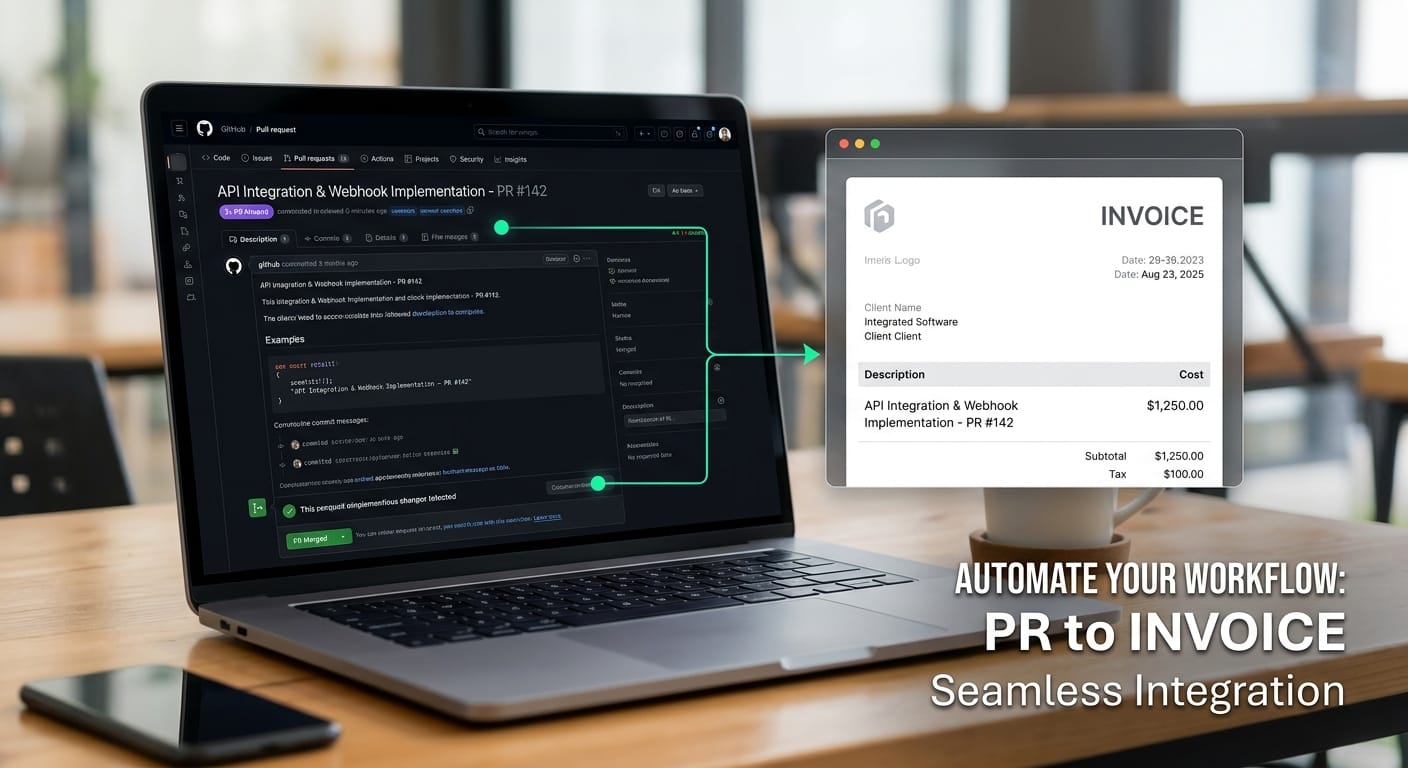
Automate your invoice creation pipeline
By adopting a keyboard-first pipeline alongside modern developer invoicing automation strategies, you can skip the manual invoice creation steps entirely. This approach lets you focus on writing code while an automated system handles the administrative translation in the background.
Merge your pull request
AI translates the description
Review the Stripe draft
Connecting your repository to your invoicing pipeline unlocks several workflow automations that benefit your daily routine:
- Saves an average of five administrative minutes per pull request.
- Provides a source-linked audit trail so clients understand the exact value of your shipped work.
- Applies per-client tone controls to ensure the generated descriptions match your professional brand.
Upgrading your freelance tools gives you total control over invoice customization while removing the drudgery of end-of-month billing. When your documentation and invoicing happen in the same motion, you never accidentally leave billable hours out of your final draft.
Start billing
Frequently asked questions about app developer billing
Finding the best billing software for app developers usually comes down to how smoothly a tool integrates with your daily coding habits. Your invoicing stack should reduce administrative overhead, whether you rely on a generous free tier like Canva or Wave, or invest in a premium B2B billing platform. Here are direct answers to the most common questions freelancers ask when finalizing their payment workflows.
Bridging the gap between the terminal and the client inbox is often the hardest part of freelance billing. While traditional time-tracking tools easily capture your hourly effort, value-based invoicing requires you to clearly highlight the broader business impact of your deliverables. Setting up the right systems early ensures you communicate this value clearly without spending hours manually transcribing your branch history.