

Best Invoicing Apps for Solo Dev Shops: Stop Manual Data Entry
Looking for the best invoicing apps for a solo dev shop? Explore comparisons of traditional tools and learn how to automate your billing right from GitHub.
Discover the best invoicing tools for solo developers. Compare traditional accounting apps against automated, developer-first workflows that turn your GitHub PRs into paid invoices.
What makes a great invoicing app for solo developers?
For a solo dev shop, the best invoicing app isn't the one with the most features—it's the one that gets out of your way and lets you get back to writing code.
Evaluating the best invoicing apps for solo dev shops usually starts with a frustrating realization. Traditional accounting software is built for brick-and-mortar storefronts, not modern software engineers. When you are shipping pull requests and billing for discrete features, you do not need complex supply chain mechanics or physical inventory management.
Why legacy accounting software falls short
Heavyweight platforms like QuickBooks and Xero pack massive feature sets designed for massive organizations and retail businesses. While they handle traditional double-entry bookkeeping perfectly, their core workflows actually create administrative drag for an independent programmer. You end up navigating cluttered dashboards and copying over project details manually just to turn a week of commits into a generic PDF.
A great tool maps directly to your development cycle rather than forcing you into an unfamiliar accountant's workflow. When evaluating developer invoicing software, prioritize platforms that focus entirely on getting you paid for your shipped output. The right billing software should deliver on a few distinct needs:
- Automated data entry: It connects directly to where you work, turning merged code and pull requests into billable line items.
- Zero bloat: It skips the generic business features you will never touch, keeping the interface minimal and fast.
- Client-friendly translation: It easily bridges the gap between actual technical commit data and professional, client-ready billing descriptions.
Ultimately, the fastest way to get paid is limiting the friction between deploying a feature and firing off the bill. By dropping the legacy business software in favor of developer-first automation, you escape the copy-paste trap and reclaim your billable coding hours.
Comparing traditional billing tools for freelancers
When evaluating the best invoicing apps for solo dev shops, traditional accounting tools often fall short because they demand heavy manual data entry. Heavyweights like QuickBooks and FreshBooks excel at general tax compliance, but they handle billing by forcing you to manually type out every completed task, commit, and logged hour.
Competitor research consistently highlights platforms like QuickBooks, Xero, and FreshBooks as essential software for small business owners. However, these platforms are built to serve everyone from independent bookkeepers to large agencies. For a developer, this means paying for bloated features while cobbling together separate time-tracking apps (or seeking a Harvest alternative for developers) just to accurately calculate your billable hours.
The shift toward leaner, developer-focused tools
To reduce this administrative overhead, many freelancers look for simplified setups that ditch the unnecessary inventory management and CRM modules. Developer-friendly alternatives like Invoice Ninja provide a much cleaner interface tailored specifically for digital service providers. Unfortunately, while these platforms remove the corporate bloat, they still rely entirely on you translating your completed work into manual line items at the end of every sprint.
Automating invoices directly from GitHub pull requests
The traditional approach to billing is broken for developers. Instead of wrestling with clunky dashboards, the best invoicing apps for solo dev shops now bridge your codebase directly to your payment gateway. You can completely ditch manual data entry by learning how to automate invoicing from a GitHub repo and turning merged pull requests into paid bills.
Standard accounting tools like QuickBooks or FreshBooks easily track your overall finances, but they still force you to manually translate your dev work into billable line items. Every time you ship a feature, you break your flow state to type up what you just built. Evaluating the best invoicing apps for solo dev shops means looking for modern workflows that completely eliminate this tedious context switching.
Diffbill introduces a completely new paradigm by connecting your repository directly to Stripe. Once a pull request is merged, the system instantly translates that activity to create client-ready invoices from GitHub, delivering a polished Stripe draft. You never have to manually copy and paste commit messages into a separate standalone tool again.
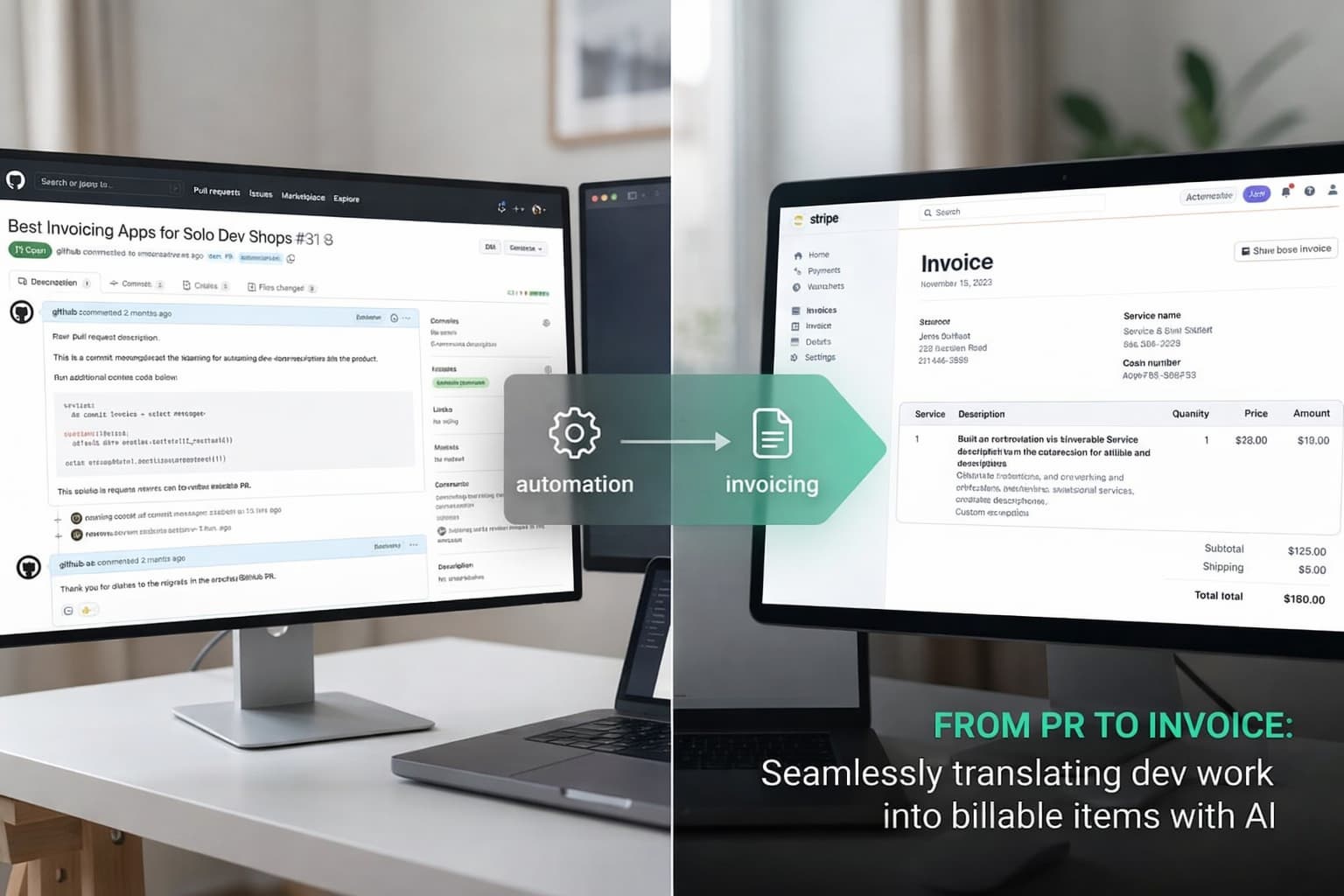
Translating raw commits into professional billing
Raw commit messages are rarely suitable for a non-technical client's eyes. Diffbill acts as an AI invoice generator for freelancers that automatically rewrites your technical jargon into polished updates, saving roughly five minutes per PR. This automation turns your codebase into a reliable system of record with several key benefits:
- Automatic rewriting: Translates terse technical updates into clear, professional business language.
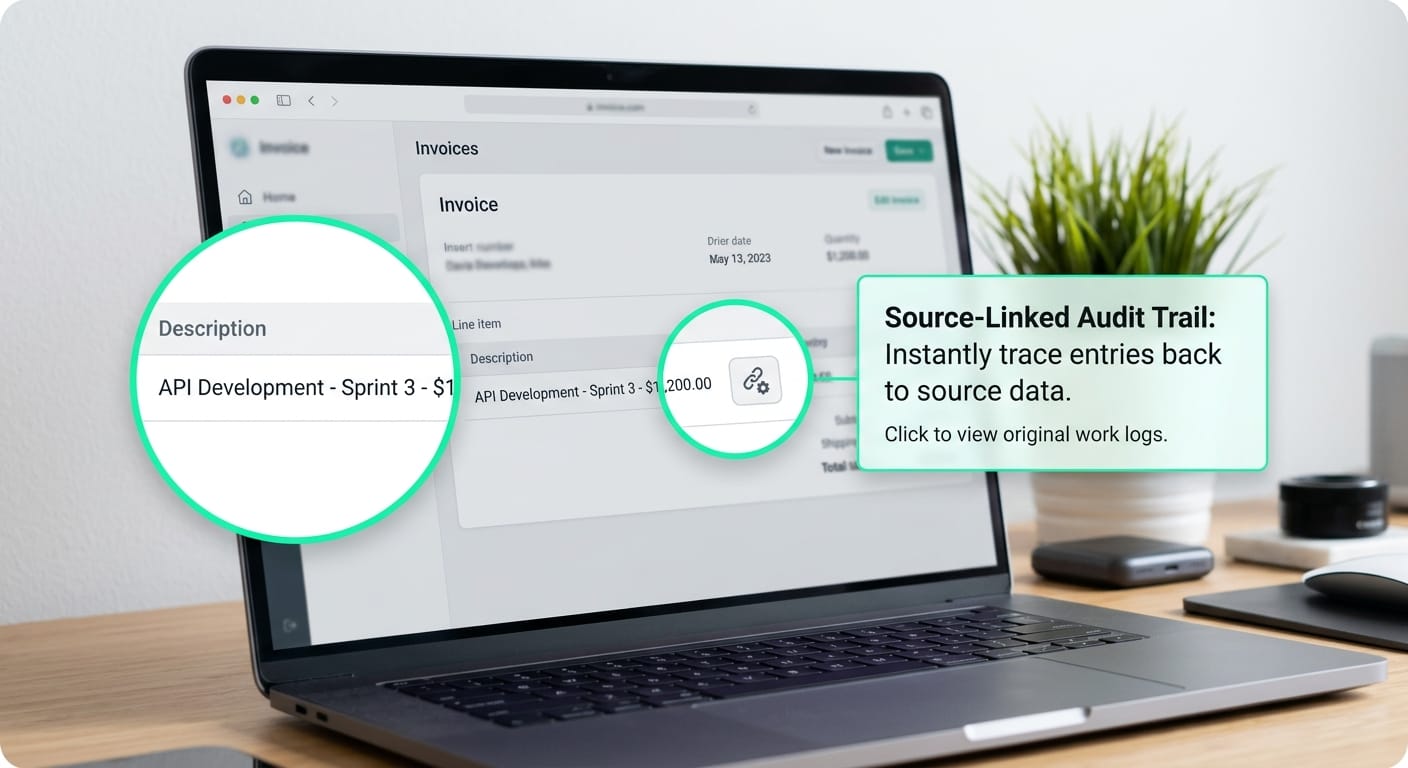
- Source-linked transparency: Provides your clients with a verifiable audit trail of the actual work shipped.
- Draft control: Lets you comfortably review and tweak the line items in Stripe before finalizing the invoice.
If you are ready to stop manually formatting spreadsheets at the end of every month, you can test this automation immediately. The free Starter Plan is designed for individual developers, providing a simple entry point to handle basic rewriting and redaction for a single repository. Stop typing out what you already coded and let your shipped work bill itself.
Start billing for free
Essential billing features for an engineering workflow
The best invoicing apps for solo dev shops do more than generate PDFs; they adapt to how engineers actually work. Instead of forcing you through clunky visual menus, the right tool offers technical ergonomics that keep your hands on the keyboard. This transforms billing from a tedious administrative chore into a seamless extension of your deployment cycle.
Key Takeaways
- Keyboard-first workflows to navigate faster.
- Source-linked audit trails to eliminate client disputes.
- Direct integrations with Stripe for instant payment processing.
Transparency is critical when billing for complex, abstract technical projects. A source-linked audit trail attaches specific GitHub pull requests directly to your invoice line items, providing verifiable proof of work. Clients can see exactly what you shipped without requesting a sync meeting, which protects your deep work time and eliminates disputes over billable hours.
Processing those approved invoices should be just as frictionless. When establishing billing automation for your software development lifecycle, the primary goal of your accounting stack is simply getting paid faster. Direct integrations with platforms like Stripe allow clients to settle balances instantly via credit card or ACH, eliminating the need to manually reconcile bank transfers at the end of the month.
Common questions about developer invoicing software
Finding the best invoicing apps for solo dev shops usually comes down to how you actually prefer to work. Solo developers often find themselves choosing between traditional stopwatch apps and modern, milestone-driven platforms. Let's tackle the most common questions freelancers ask before committing to a new billing workflow.
Aligning Your Workflow with the Right Tools
Many traditional platforms function as heavy administrative suites for general small businesses rather than focused tools for software engineers. For instance, while typical accounting software relies heavily on manual estimates or traditional developer time tracking software, developer-first systems lean into the version control tools you already use. Moving away from manual data entry means you spend less time on administration and more time shipping code.
The right billing setup should feel like a natural extension of your development environment. Instead of context-switching to start a timer in a separate app, many independent engineers now prefer asynchronous, value-based billing based on actual merged code.
Free starter tiers are often the perfect testing ground for independent consultants navigating these workflow changes. If you only manage a single active client repository, a free tier lets you automate your core invoicing loop without eating into your monthly margins. As your solo shop takes on more concurrent clients or requires customized invoice branding, you can effortlessly scale to professional plans without migrating your entire financial history.