
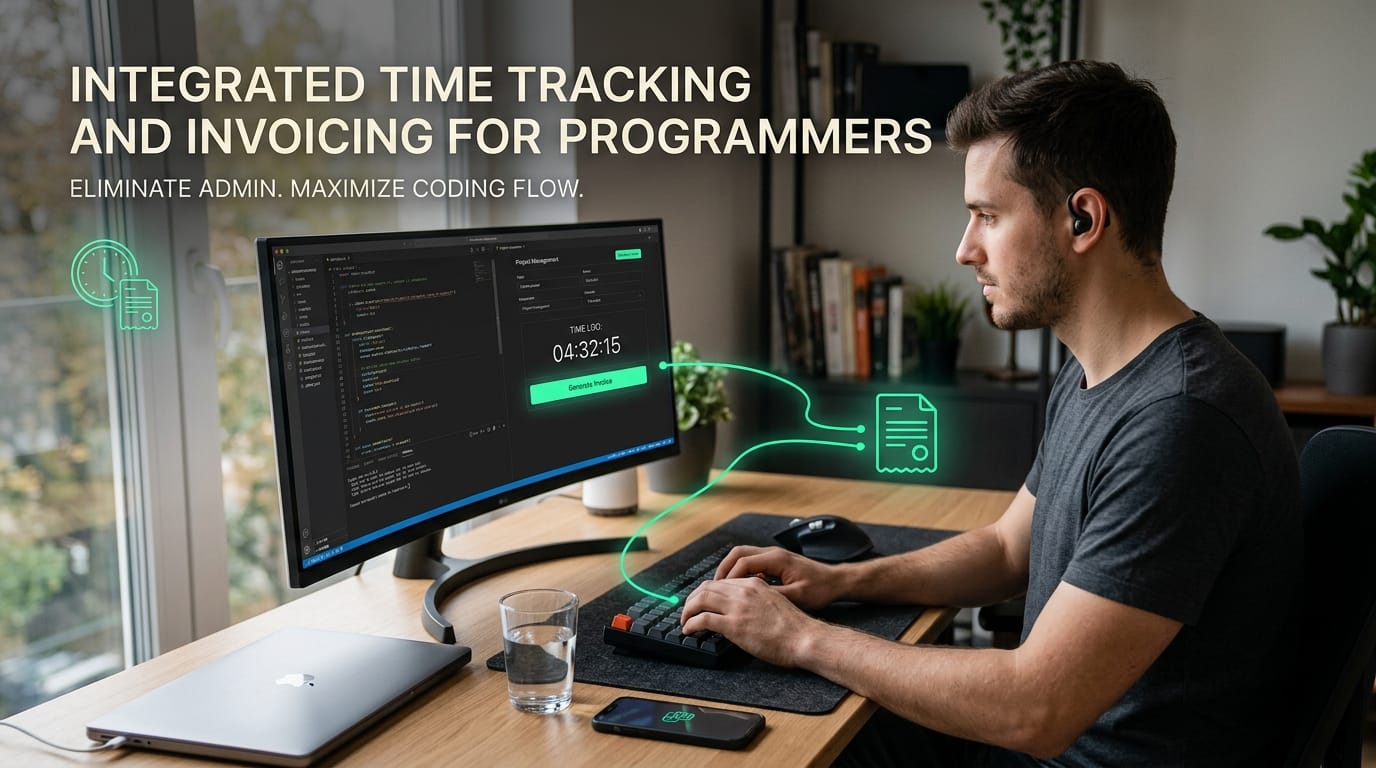
Integrated Time Tracking and Invoicing for Programmers
Learn how programmers can integrate time tracking with invoicing to automate billable work and stop wasting hours on manual timesheets. Compare legacy timers against PR-driven billing.
Discover how software developers can eliminate manual administrative work by integrating their time tracking and invoicing directly with their coding workflows.
What is integrated time tracking and invoicing?
Effective integrated time tracking and invoicing for programmers is the process of automatically syncing your logged work hours or shipped features into tools that generate and send client bills. This seamless data flow ensures that every billable coding session translates directly into revenue.
Key Takeaways
- Eliminates double data entry
- Reduces revenue leakage from forgotten hours
For many general agencies, integration simply means connecting start-and-stop timers to standard invoicing platforms. However, true integration for developers goes beyond running a desktop clock. It connects your actual engineering output—like merged pull requests or closed issues—straight to your financial software.
This workflow entirely eliminates the need to manually enter data twice. You no longer have to pause your coding flow to manage a separate timesheet app, nor do you have to dig through Git repositories at the end of the month to remember what you built. The required billing data flows directly from your repository to your client's inbox.
When your code automatically translates into invoice line items, you capture every feature and hotfix you ship. This direct connection prevents the common revenue leakage that happens when developers underbill simply because they forgot to document a minor request at the end of a busy week.
Why generic timers break a developer's flow
Traditional manual timers force you to break your coding state just to log billable hours. While generic platform dashboards claim to streamline business workflows, they actually create severe cognitive friction for developers. Adopting integrated time tracking and invoicing for programmers stops the constant context-switching of toggling start and stop buttons.
Many freelancers stick with general-purpose tools like Harvest or TMetric purely out of habit. Unfortunately, this status quo bias means you hemorrhage unbillable administrative hours by manually managing your time records. Every time you leave your editor to click a timer or reconstruct an end-of-week timesheet from memory, you lose your deep work focus.
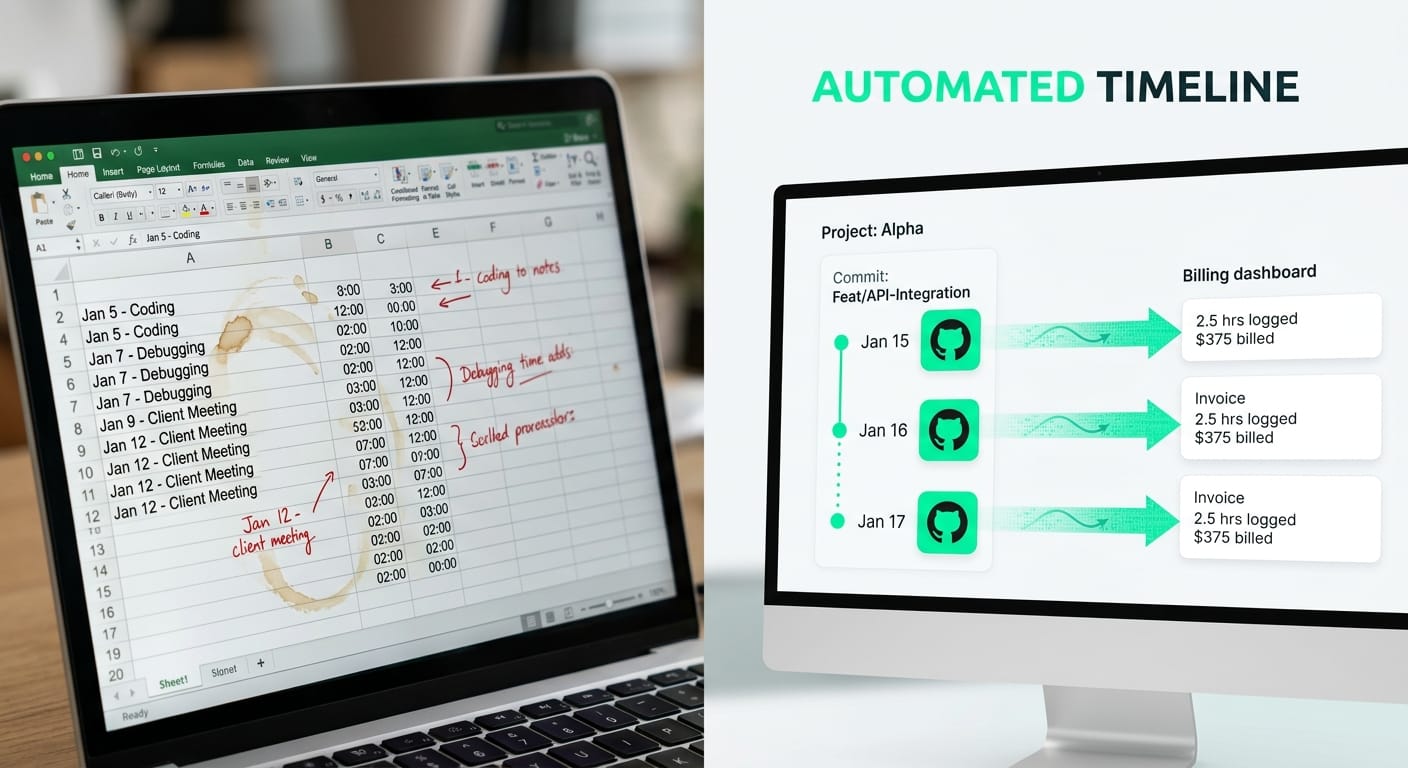
The cost of context switching
Generic solutions are built to serve every professional service, which means they are optimized for none. This one-size-fits-all approach forces developers to absorb the overhead of data entry at every billing cycle. Relying on traditional timesheets introduces several distinct points of friction into your coding workflow:
- Interrupting complex problem-solving to toggle desktop apps or browser extensions.
- Guessing how long a specific feature took during Friday afternoon timesheet catch-ups.
- Translating technical commit histories into client-friendly invoice descriptions by hand.
Standard time-tracking platforms require you to do the heavy lifting of bridging your code and your client invoices. By making the shift to systems that sync directly with your repository, you replace unreliable manual tracking with an automated, verifiable workflow.
Key features to look for in a programming billing stack
The most effective billing stack connects your daily development work directly to your revenue. When evaluating integrated time tracking and invoicing for programmers, look for tools that automatically sync with your version control systems, use AI to translate technical commits into client-friendly descriptions, and push approved drafts straight to your payment processor.
Manual data entry is a major bottleneck for independent developers and engineering teams. By implementing billing automation for your software development lifecycle, you effectively eliminate the need for data re-entry and significantly reduce billing errors. Instead of copy-pasting commit logs at the end of the month, a modern software stack captures billable data exactly where the work actually happens.
Essential components of a developer billing stack
Top-tier engineers approach administrative work like a system architecture problem by automating the repetitive steps. To keep your workflow efficient and focused on shipping code, your chosen solution should handle the heavy lifting of context switching.
- Version control hooks: Your billing software should automatically listen to merged pull requests in platforms like GitHub to capture billable work as it happens.
- Automated translation: Clients rarely understand complex database migration details. Look for platforms that instantly rewrite technical jargon into clear summaries of the business value delivered.
- Payment processor syncing: The administration system must turn your approved tasks directly into live invoice drafts in payment gateways like Stripe.
| Feature Category | Developer Problem Solved |
|---|---|
| Version Control Integration | Eliminates the need to manually log tasks outside of your code editor or GitHub repositories. |
| AI Rewriting | Translates cryptic pull request titles and commit messages into professional invoice line items. |
| Payment Gateway Sync | Removes the final friction of copying drafted records into Stripe or your primary accounting software. |
Automating invoices directly from GitHub pull requests
Connecting your version control directly to your billing platform creates a seamless system of integrated time tracking and invoicing for programmers. Instead of wrestling with manual timers, developers can automatically convert merged GitHub pull requests into polished Stripe invoice drafts. This automated workflow saves freelancers roughly five minutes per pull request.
Traditional timekeeping software forces you to track raw hours using constant stopwatch clicks. As seen with typical developer time tracking software, you end up managing administrative timesheets instead of focusing on the actual code. Shifting your billing from raw hours to a tangible output model provides distinct productivity benefits:
- Removes the cognitive load of starting and stopping timers while you work.
- Bills clients based on actual features and bug fixes successfully shipped.
- Creates a verifiable audit trail linked directly to your source repository.
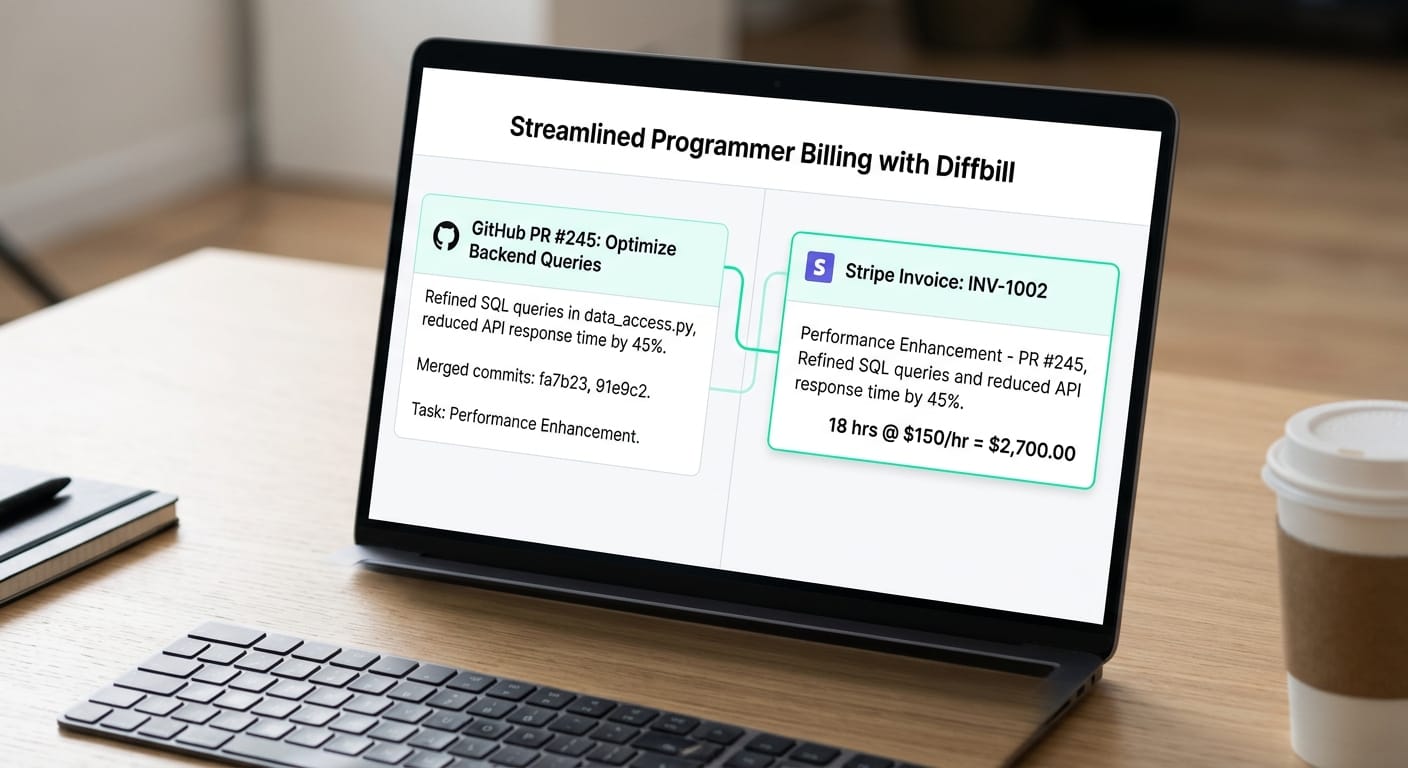
Skipping the timesheet workflow
By tapping into your existing repository activity, you leverage cognitive ease and strip away administrative friction entirely. The setup allows your technical commits to serve as the undeniable proof of work for your clients. Here is exactly how this hands-free approach eliminates manual data entry from your daily routine:
Merge your code
AI rewrites the PR
Review Stripe draft
This direct pipeline creates an effortless system of integrated time tracking and invoicing for programmers who need to maintain an efficient, keyboard-first workflow. Freelancers using advanced configuration options can automatically strip out internal brand names and tailor the final invoice description to each specific client. You retain complete control over the professional polish of your billing while letting automation handle the repetitive busywork.
Start billing
Frequently asked questions about developer billing
When freelancers set up their billing operations, the most common questions revolve around capturing every hour worked without interrupting the development cycle. Using integrated time tracking and invoicing for programmers ensures that both billable code commits and non-billable administrative tasks sync seamlessly to your financial tools. This eliminates manual data entry and provides real-time visibility into your actual labor costs, an advantage often achieved through effective developer invoicing automation strategies.
Managing multiple client repositories often complicates daily timesheets. Developers need a system that accurately tracks context switching between different codebases, issue trackers, and internal correspondence. Dedicated freelance tools allow you to tag specific tasks to different clients, making it much easier to isolate core feature work from routine non-billable maintenance.
Transitioning your billing model
As you become faster at writing and deploying code, traditional hourly tracking can unintentionally penalize your overall efficiency. Many independent developers eventually transition toward value-based pricing or flat-rate feature billing. Linking your integrated time tracking and invoicing for programmers directly to shipped pull requests aligns your revenue with the actual value delivered to the client.
Deciding on the right administrative stack requires evaluating how you prefer to operate on a daily basis:
- Hourly timers: Broad service platforms emphasize manual desktop timers and team profitability reporting, which works well if your agency strictly bills by the hour.
- Automated extraction: Targeted developer tools pull context directly from version control systems, instantly transforming a week of merged code into a formatted invoice draft.